
1. Average Cost per Square Foot Overview
1.1 Typical Price Range for Aluminum Pergola Houses
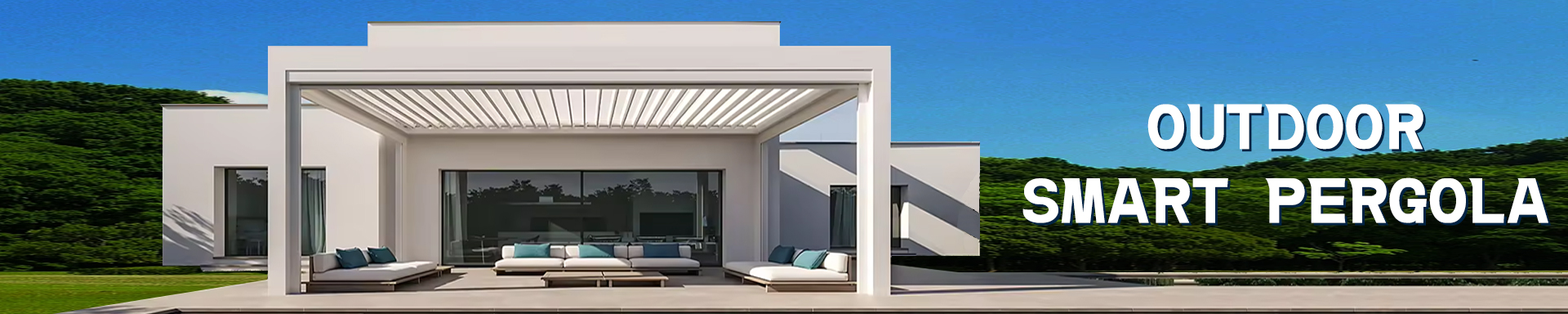
When buyers ask for a quick estimate, most aluminum pergola house projects land between $45 and $95 per square foot, depending on structure type and roof system. A basic fixed-roof aluminum frame for a 20 sqm backyard patio often starts near the lower end, while adjustable or smart systems push pricing upward. For example, a modern aluminum pergola covering a 6 m × 4 m house terrace with drainage channels and reinforced columns typically prices higher due to material thickness and engineering tolerances. This range already reflects aluminum’s corrosion resistance and low maintenance advantage, which explains why it consistently costs more than steel kits but less than custom timber builds over time. If you compare manually operated designs with adjustable louvers, the difference per square foot becomes clear, especially once automation enters the picture via louvered pergola systems that add mechanical precision and weather control.
| Pergola Type | Typical Cost per Sq Ft (USD) |
|---|---|
| Fixed roof aluminum structure | $45–$60 |
| Adjustable louvered roof | $60–$80 |
| Motorized / smart-controlled roof | $80–$95 |
1.2 What “Cost per Square Foot” Usually Includes
A square-foot price usually covers more than just the frame. In most supplier quotes, the figure bundles aluminum profiles, surface coating, roof structure, and standard hardware. For a premium Aluminum pergola house, that means powder-coated or PVDF-finished aluminum, concealed fasteners, integrated guttering, and load-rated columns suitable for wind and snow zones. Some suppliers also include basic installation guidance or pre-drilled components, which saves labor time on-site. What it rarely includes are electrical wiring, smart controls, or site-specific foundations. If a quote looks unusually low, check whether drainage systems, anchoring plates, or reinforced beams appear as “optional” line items. In real-world projects, such as a modern courtyard pergola attached to a villa, these excluded elements often add 10–20% to the final installed cost.
1.3 Regional Price Variations and Market Differences
Cost per square foot shifts noticeably by region due to labor rates, climate standards, and local building expectations. In the U.S. West Coast or Australia, aluminum pergola pricing trends higher because codes demand stronger wind resistance and UV-stable coatings. In contrast, Southeast Asia or Southern Europe often sees lower averages due to reduced labor costs and lighter structural requirements. Shipping distance also matters. A modular aluminum system shipped inland from a port city can add $3–$6 per square foot in logistics alone. Smart buyers adjust expectations based on climate and code, not just advertised price. For instance, a pergola designed for a snow-load-rated mountain home terrace will never match the per-square-foot cost of a coastal backyard installation, even when dimensions look identical.
2. Cost Differences by Pergola Style
2.1 Fixed Roof Aluminum Pergola Cost per Sq Ft
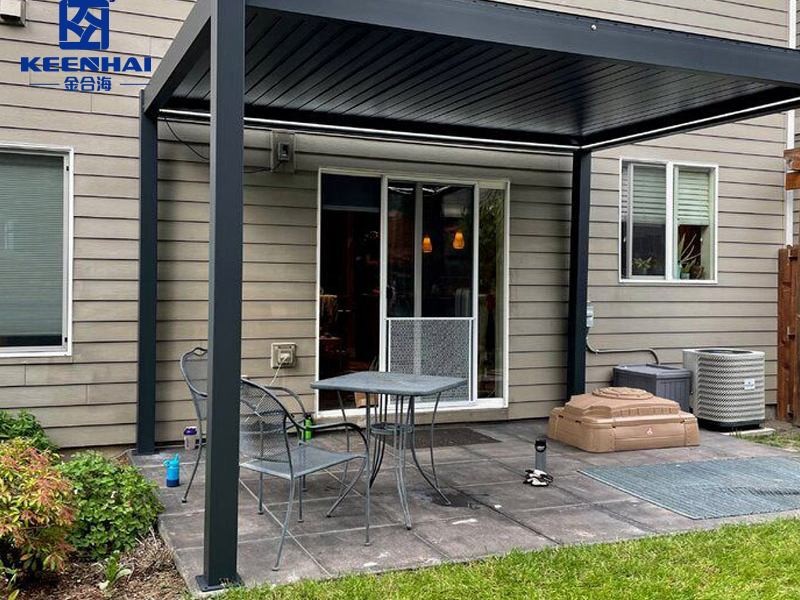
Fixed-roof designs sit at the most predictable end of the pricing spectrum. In most residential projects, a fixed aluminum pergola structure typically ranges from $40 to $60 per square foot, assuming standard powder-coated profiles and a non-adjustable roof panel system. Homeowners often choose this option for garage-side patios, poolside seating areas, or 15–25 sqm backyard terraces where shade consistency matters more than flexibility. The lower cost comes from structural simplicity—no moving parts, fewer tolerance requirements, and faster installation. In practice, installers usually complete a fixed-roof build in 3 steps:
-
Anchor base plates to concrete or footings.
-
Assemble columns and beams with pre-cut profiles.
-
Mount roof panels and integrate basic drainage.
Because the roof never adjusts, long-term maintenance remains minimal, which keeps lifetime cost per square foot stable even after 10–15 years of use.
2.2 Louvered and Adjustable Roof Cost per Sq Ft
Adjustable systems introduce a noticeable cost jump, with most louvered pergola designs landing between $60 and $80 per square foot. The increase reflects precision-engineered louvers, rotation mechanisms, and tighter manufacturing tolerances. On a modern house terrace of 30 sqm, this difference often translates into several thousand dollars more than a fixed roof, yet homeowners gain real control over sunlight, airflow, and rain protection. This style suits outdoor dining zones and mixed-use patios, where users adjust angles throughout the day rather than relying on static shade. In real installations, buyers usually pay more attention to louver thickness (often 1.2–1.5 mm aluminum) and load ratings than surface finish. Once the adjustable roof appears in the design phase, it often makes sense to evaluate full-system options from a dedicated louvered pergola range rather than piecing components together, which can quietly inflate labor costs.
2.3 Motorized and Automated Pergola Cost per Sq Ft
Motorized and automated pergolas represent the premium tier, commonly priced from $80 to $100+ per square foot, depending on control systems and accessories. This category includes remote-controlled louvers, rain sensors, wind sensors, and smart-home integration. For example, a 20 sqm rooftop pergola on a modern villa often requires reinforced beams, concealed wiring channels, and synchronized motors, all of which add cost per square foot. The value lies in usability rather than structure alone—users open or close the roof in seconds, even during sudden weather changes. Installation typically follows a clear sequence:
-
Pre-route power supply and control wiring.
-
Install motorized shafts and calibrated louvers.
-
Test automation logic and safety cutoffs.
Buyers comparing advanced options often focus less on raw price and more on system reliability, which explains why automated aluminum pergola solutions tend to hold resale value better than manual alternatives in high-end residential markets.
3. Material and Structural Factors Affecting Cost
3.1 Aluminum Grade, Thickness, and Frame Design
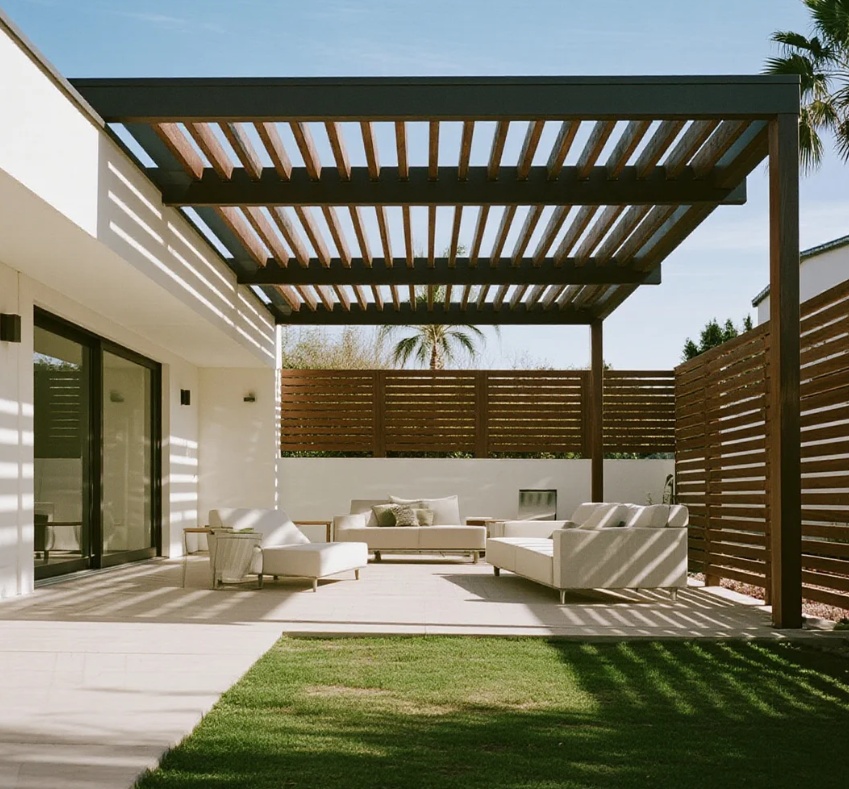
Material choice drives cost per square foot more than many buyers expect. Most residential projects use 6063-T5 or 6061-T6 aluminum, but thickness and frame geometry make the real difference. A premium aluminum pergola house built with 2.0–3.0 mm wall thickness columns and boxed beams costs noticeably more than lightweight profiles, yet it performs better under wind and snow loads. For example, a 20 sqm backyard patio using thicker columns often reduces the need for extra supports later, which saves labor. Stronger frames allow wider column spacing without sacrificing rigidity, a detail that directly affects both aesthetics and usable space.
| Factor | Budget Range | High-End Range |
|---|---|---|
| Aluminum Grade | 6063-T5 | 6061-T6 |
| Column Thickness | 1.2–1.5 mm | 2.5–3.0 mm |
| Beam Type | Open profile | Boxed structural beam |
Once buyers move beyond entry-level specs, many naturally compare options within a modern aluminum pergola house lineup rather than mixing structural grades.
3.2 Coatings, Finishes, and Weather-Resistance Treatments
Surface treatment quietly adds $5–$15 per square foot, but it defines long-term durability. Standard powder coating works well for mild climates, while coastal or high-humidity zones benefit from fluorocarbon or marine-grade coatings. The real cost factor is layer count, not color—two-layer systems resist fading for 8–10 years, whereas three-layer treatments often last 15+ years with minimal chalking. In real-world projects, installers follow a clear sequence:
-
Pre-treat aluminum with chemical conversion.
-
Apply primer and bake-cure.
-
Add topcoat for UV and corrosion resistance.
Buyers planning a modern house terrace exposed to sun and rain year-round usually recover the higher upfront coating cost through lower repainting and cleaning expenses.
3.3 Column Spacing and Load-Bearing Requirements
Structural layout influences cost just as much as materials. Wider column spacing demands thicker beams, reinforced joints, and stricter tolerances. For instance, increasing spacing from 3 m to 4.5 m can raise material costs by 10–20% due to heavier sections, yet it opens the space visually and improves furniture layout. Load calculations matter most in snow-prone or windy regions, where roof weight and uplift forces drive design decisions. Installers typically verify structure in three steps:
-
Confirm local wind and snow load values.
-
Select beam depth and column size accordingly.
-
Test anchoring points and footings before final assembly.
Well-balanced spacing avoids overbuilding while still delivering a clean, open pergola layout that feels intentional rather than crowded.
4. Size and Layout Impact on Square Foot Pricing
4.1 Small vs Large Pergola Cost Efficiency
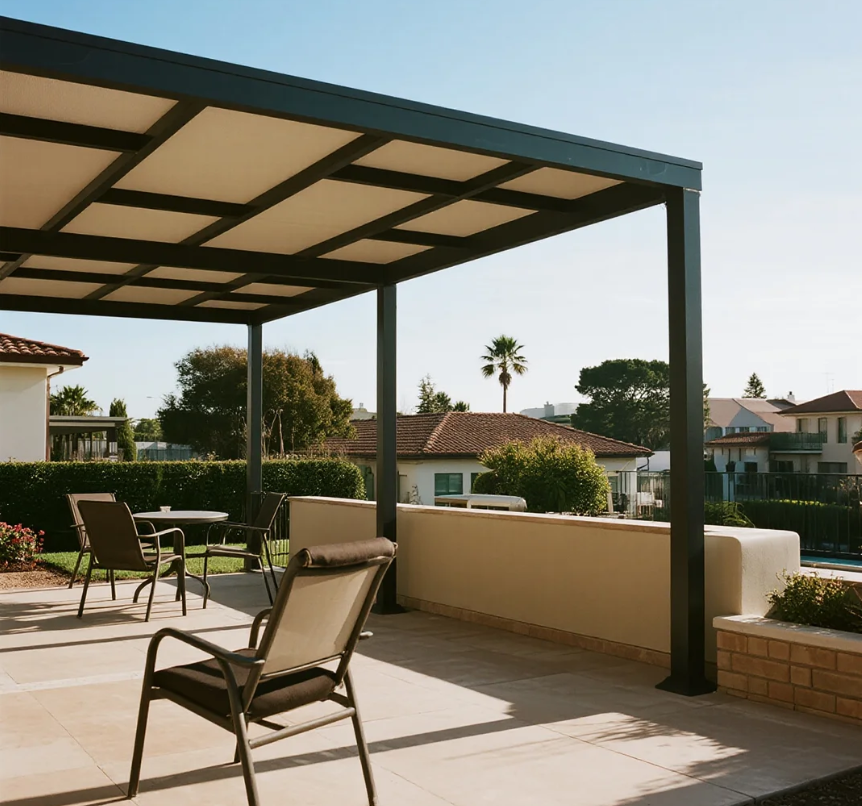
Square-foot pricing almost always drops as pergola size increases, even when materials stay the same. Small units under 12–15 sqm carry higher per-sq-ft costs because fixed expenses—engineering, brackets, drainage components, and installation labor—do not scale down proportionally. In contrast, a 25–30 sqm backyard patio pergola spreads those fixed costs across more area, often reducing unit pricing by 10–25% per square foot. This does not mean larger structures cost less overall, but they deliver better value per square foot, especially for homeowners planning dining, lounging, and circulation zones under one roof rather than fragmented coverage.
4.2 Attached vs Freestanding Pergola Cost Differences
Layout choice directly affects structural complexity. Attached pergolas typically cost 5–15% less per square foot because one side anchors to an existing wall, reducing columns, footings, and bracing. However, attachment requires precise wall assessment, waterproof flashing, and load verification. Installers usually follow a clear sequence:
-
Inspect wall structure and load capacity.
-
Install mounting plates and waterproof flashing.
-
Align roof slope for proper drainage.
Freestanding designs cost more due to extra columns and foundations, yet they offer full layout freedom and better airflow. In open gardens or poolside zones, freestanding layouts often justify the higher square-foot cost through usability and placement flexibility.
4.3 Multi-Zone or Modular Layout Pricing Considerations
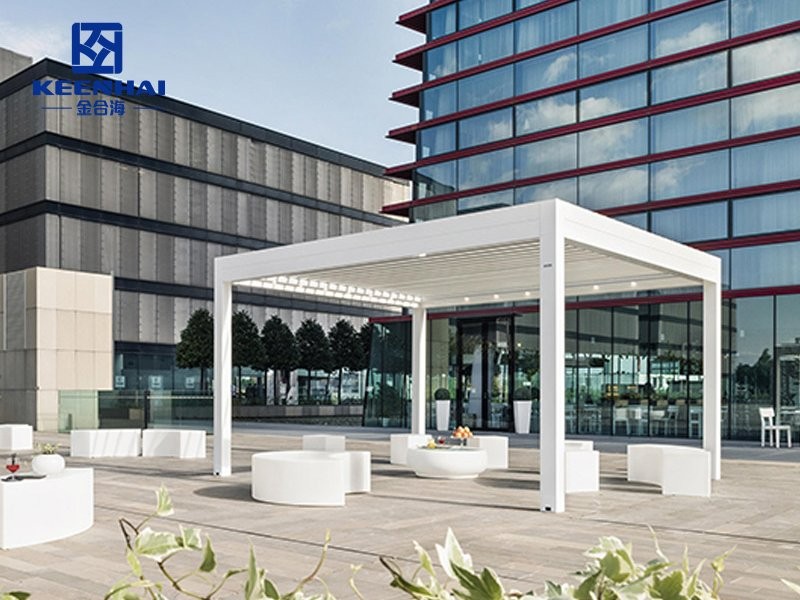
Multi-zone layouts—such as linking a dining area with a lounge zone—raise square-foot pricing slightly due to connectors, alignment tolerances, and independent drainage paths. Modular systems reduce that premium, especially when homeowners expand in phases. For example, many buyers start with a single covered zone and later add adjustable roofing like a louvered pergola, which integrates seamlessly within modular aluminum systems and maintains consistent pricing logic across sections . The key cost driver is junction complexity, not roof area—clean modular joins keep expansion costs predictable and avoid full structural redesign.
5. Installation and Labor Cost per Square Foot
5.1 DIY Installation vs Professional Installation Pricing
Installation method has a direct and measurable impact on cost per square foot. DIY installation usually lowers labor costs by $8–15 per sq ft, but it only works for small, fixed-roof structures with simple anchoring. Once projects exceed 18–20 sqm, include adjustable roofs, or require precise alignment, error risk rises sharply. Professional installation typically adds $15–30 per sq ft, but it covers layout accuracy, drainage slope control, and structural load compliance. Most pricing gaps disappear when rework, tool rental, and time loss get factored in, which explains why larger aluminum pergola house projects almost always rely on professional crews rather than DIY attempts.
5.2 Foundation, Anchoring, and Site Preparation Costs
Foundation work often surprises buyers because it scales differently than roof area. Anchoring on an existing concrete slab costs $3–6 per sq ft, assuming proper thickness and reinforcement. New footings or pads increase costs to $8–14 per sq ft, depending on soil conditions and column spacing. Installers typically follow a fixed process:
-
Verify ground level and drainage slope.
-
Core-drill or excavate anchor points.
-
Pour or reinforce concrete bases.
-
Cure before structural loading.
Skipping or downsizing foundations never saves money long-term, as settlement or movement leads to alignment failure and water leakage.
5.3 Installation Time and Labor Rate Breakdown
Labor pricing reflects both crew size and system complexity, not just square footage. Simple fixed-roof systems install in 1–2 days, averaging 0.6–0.8 labor hours per sq ft. Adjustable or motorized roofs push that to 1.0–1.4 labor hours per sq ft due to wiring, calibration, and testing. Labor rates vary by region, but most markets fall between $45–85 per hour per installer. Faster installation does not mean lower quality—experienced crews reduce per-sq-ft labor costs by minimizing adjustments, alignment corrections, and post-install callbacks, which directly stabilizes final pricing.