1. Material-Level Energy Performance
A well-built Aluminum pergola house delivers strong baseline energy performance because aluminum reacts predictably under high heat and intense sunlight. Architects choose it for patios and poolside extensions in hot regions like Phoenix or Abu Dhabi where summer surfaces routinely hit 55–65°C. Aluminum dissipates heat faster than most structural metals, which keeps the overhead temperature more stable during peak hours. When homeowners pair adjustable shading with lighter finishes, the structure blocks a meaningful chunk of radiant load from hitting nearby windows, so the indoor AC system does not fight as much external heat. This material-level behavior sets the energy-efficiency foundation before louvers, add-ons, or automation even come into play.
1.1 Thermal Conductivity and Heat-Reflection Properties
Aluminum conducts heat quickly, but this becomes an advantage when the overhead surface is fully exposed to direct sun. The metal pulls in surface heat and then releases it into the surrounding air faster than wood or steel. In real projects, such as patio covers behind west-facing living rooms, the roof temperature often drops by 8–12°C within 20–30 minutes after shade adjustment because airflow removes stored heat more efficiently. At the same time, high-reflectance finishes cut radiant gain by a noticeable margin, which keeps the shaded zone cooler during afternoons. If you compare aluminum with other common outdoor materials, its combined thermal and reflective pattern explains why it supports more stable comfort on extremely hot days.
Comparison of Heat Behavior (Typical Values)
| Material | Surface Heat Retention | Heat Dissipation Speed | Typical Reflectance Range |
|---|---|---|---|
| Aluminum | Low | Fast | 0.50–0.75 |
| Wood | Medium | Slow | 0.20–0.35 |
| Steel | High | Medium | 0.25–0.40 |
1.2 Surface Colors, Coatings, and Their Effect on Heat Gain
Surface coatings influence real-world comfort far more than most homeowners expect. A matte white or light-silver finish on an aluminum roof can reflect 60–75% of incoming solar radiation, while darker charcoal tones often absorb twice as much heat, pushing surface temperatures up by 10–18°C under the same sunlight. That is why contractors often recommend a cool-tone palette for homes in desert climates where mid-summer roofs can exceed 65°C. Powder-coated layers also add micro-texture that reduces glare yet still keeps reflectance high, which helps hold the shaded zone at a steadier temperature during late-day sun. Because aluminum does not warp or blister under UV exposure, coatings maintain their thermal performance for years, even when used over outdoor kitchens, oceanfront decks, or wide-span lounge areas where direct sunlight lasts all day.
2. Louver Systems and Sunlight Control
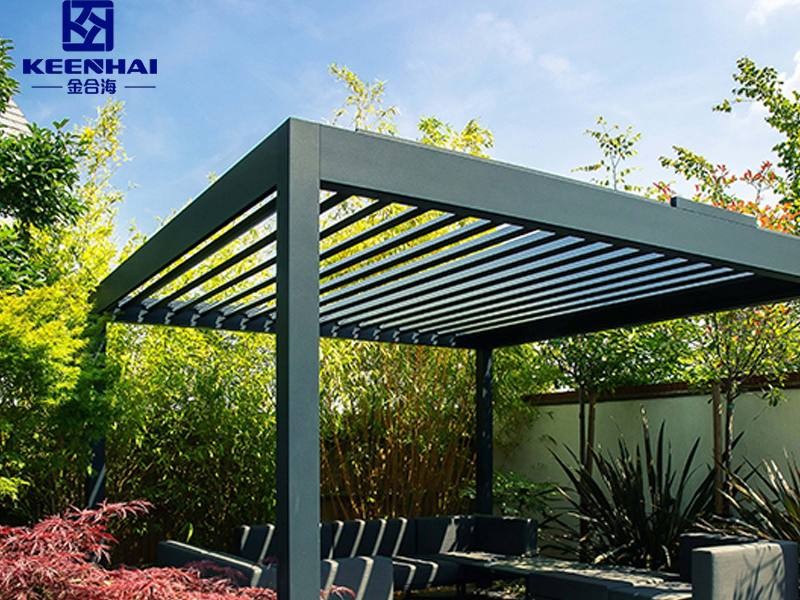
A well-built louver system determines how effectively a structure manages heat throughout the day, especially when the sun angle shifts rapidly in summer. Homeowners rely on a louvered pergola because the panels tilt with precision and change the amount of solar radiation hitting patios, window walls, or glass sliders. Small adjustments can cut direct sun exposure by more than half, which stabilizes surface temperatures and makes the shaded zone feel significantly cooler. In wide-span backyard settings, louvers also direct breezes downward, so the covered area cools faster after late-afternoon peak heat. The system essentially becomes a daily energy-control tool rather than a fixed shade roof.
2.1 Energy Savings from Adjustable Shading
Adjustable louvers lower energy use because they reduce the amount of heat reaching nearby indoor spaces. When the sun begins to rise at a steep angle, homeowners typically follow three simple steps:
-
Tilt the louvers to 25–40 degrees so the roof blocks direct beams while still pulling in airflow.
-
Re-adjust at midday to increase the shade footprint and prevent radiant heat from hitting window glass.
-
Open the louvers later in the afternoon to release trapped heat and allow rapid cooling.
In many real installations, these adjustments help lower interior cooling loads by 8–15% during hot seasons because window temperatures remain more stable throughout the day. When combined with light-toned finishes, the system prevents sudden temperature spikes that normally force the AC to work harder. The result is a shaded environment that feels noticeably cooler without relying on mechanical cooling.
2.2 Heat Management Differences Between Manual and Motorized Louvers
Manual systems rely on user adjustment, while motorized louver systems react instantly to high-angle sun, which improves heat control in homes where the sun position changes sharply through the afternoon. Motorized setups typically include high-torque actuators that move the panels in smooth increments, so the shade pattern stays consistent even when winds increase or cloud cover shifts. Because the louvers realign more frequently, the roof avoids the common mid-day heat pocket that forms under manually fixed positions.
This difference becomes especially clear in climates where surface temperatures exceed 40°C. Motorized angles help maintain a cooler microclimate by preventing hot spots and reducing conductive heat around patio doors. Homeowners often notice that furniture, decking boards, and stone flooring stay 3–6°C cooler because the automated angle changes reduce radiant buildup. In open backyard kitchens or long patio corridors, consistent shading makes the covered area feel more stable and comfortable during peak summer hours.
3. Cooling and Ventilation Efficiency
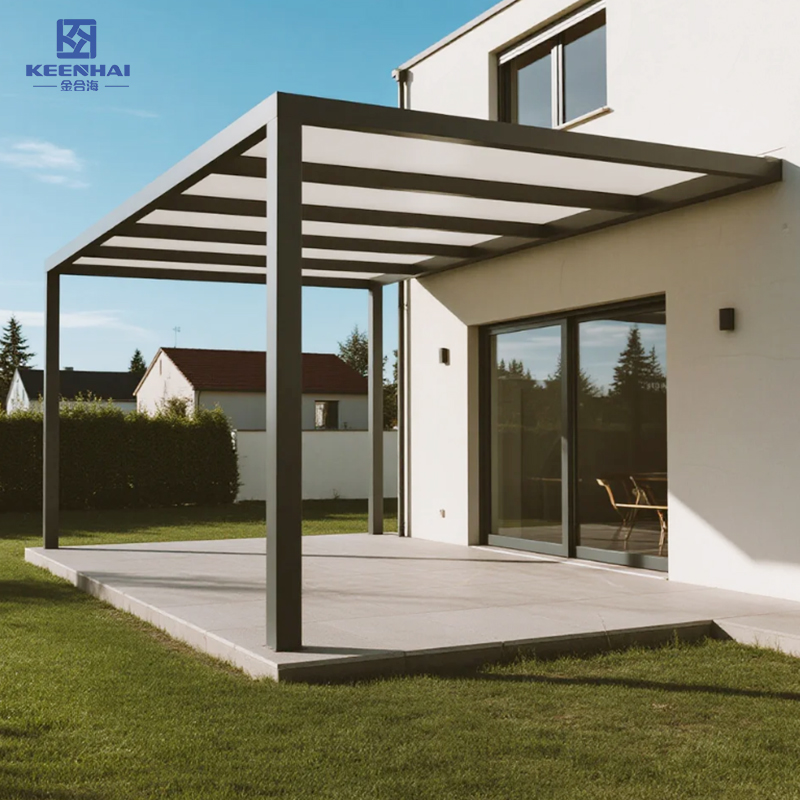
A well-designed roof structure cools the surrounding space by controlling how heat escapes and how air moves through the shaded zone. The open louver gaps create a pressure difference between the covered area and the outside air, so warm air rises and escapes through the top. This constant upward flow acts like a natural exhaust, especially during late afternoons when decking surfaces radiate stored heat. In wide patios or long dining corridors, the breeze travels horizontally first, then moves upward, which prevents the stagnant warm layer that usually builds under solid roofs. The result is a cooler, drier, and far more comfortable outdoor environment even when temperatures climb past 38°C.
3.1 Natural Airflow and Heat Dissipation Under the Structure
Natural airflow works best when the roof geometry encourages directional movement instead of trapping heat. Homeowners often follow a simple setup to maximize cooling:
-
Set the louvers at a partial-open angle, usually 15–25 degrees, so incoming air sweeps across the seating zone instead of hitting the floor directly.
-
Maintain at least two open sides to create a cross-ventilation path, which pulls warm air upward and removes it quickly.
Because warm air rises immediately, the structure forms a steady upward draft that keeps the shaded area cooler than adjacent exposed zones. This airflow pattern matters most in dry heat, where rapid dissipation prevents surfaces such as stone flooring or outdoor kitchen counters from overheating. The combination of shade and upward ventilation produces a drop of 3–7°C in perceived temperature, which users feel within minutes.
3.2 Integration with Fans, Screens, and Cooling Add-Ons
Cooling add-ons enhance the roof’s ventilation performance when temperatures stay high late into the evening. Ceiling fans, for example, create a stronger downward air column that blends with the natural upward draft, producing a balanced airflow cycle that keeps the shaded area noticeably cooler. Many homeowners integrate the system by following three steps:
-
Mount a low-profile outdoor fan directly under the beam line to avoid airflow obstruction.
-
Pair the fan with retractable screens, which slow cross-breezes just enough to improve cooling efficiency in windy regions.
-
Add a fine-mist line on the perimeter when humidity levels stay lower, ensuring the mist evaporates quickly rather than collecting on furniture.
Each add-on influences how the shaded zone feels during extreme heat. Fans accelerate air turnover, screens stabilize airflow patterns, and mist lines drop the perceived temperature by 5–10°C when used correctly. Together, these components create a microclimate that feels cooler, drier, and far more usable throughout long summer afternoons.
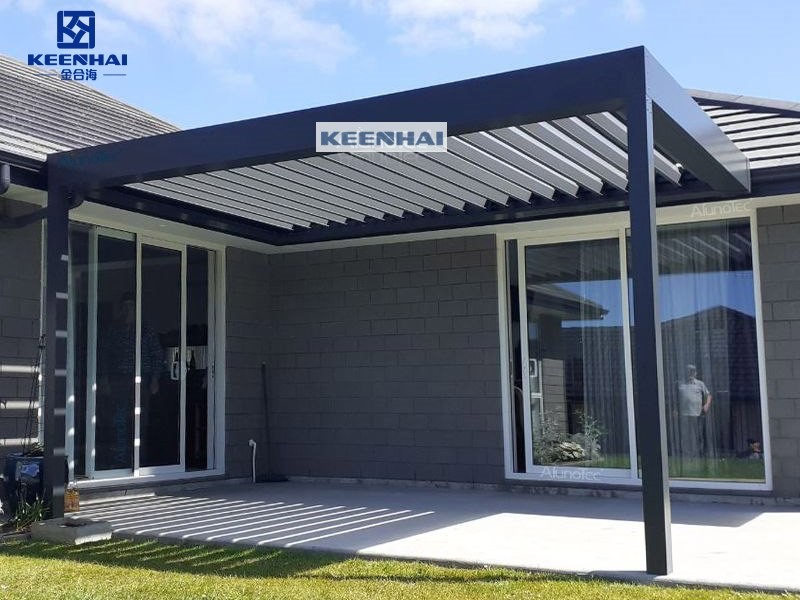
4. Impact on Adjacent Interior Spaces
A roof system placed close to exterior glazing noticeably changes indoor temperature behavior, especially during long summer afternoons. The shaded area blocks direct radiation before it reaches the glass, so the interior room stays cooler and stabilizes faster after sunrise. This early-stage heat reduction matters more than afternoon cooling, because preventing heat before it enters the building reduces thermal load far more efficiently than trying to cool it down later. Homes with south- or west-facing living rooms often see the most dramatic improvement, since large windows usually act like heat amplifiers when exposed to low-angle sunlight. By cutting that exposure, the system protects flooring, furniture finishes, and interior walls from continuous thermal stress.
4.1 Reduced Solar Heat Gain Near Windows and Patio Doors
A shaded exterior zone reduces incoming solar radiation by creating a buffer layer between the sunlight and the glass. When louvers or roof slats block direct beams during peak hours, the indoor space immediately behind the window experiences 8–15% lower surface temperature compared with fully exposed glass. Homeowners typically follow a simple setup to maximize this benefit:
-
Position the structure 30–60 cm above the window line to intercept low-angle afternoon sunlight.
-
Angle shading elements according to the room’s orientation, ensuring the strongest beams never touch the glass during summer.
The result is a measurable drop in interior heat buildup, especially in rooms with tile, engineered wood, or dark-colored cabinetry that typically absorb and radiate warmth. This reduction improves comfort but also protects interior finishes from long-term fading and thermal expansion.
4.2 Contribution to Lower HVAC Load and Cooling Costs
Because the structure prevents direct radiant heat from reaching interior glass, the HVAC system no longer battles an overheated room throughout the day. This translates directly into lighter compressor cycles and shorter cooling durations. In many homes, the cooling system runs 10–18% fewer minutes during peak heat when exterior shading blocks the initial heat gain. To maximize HVAC relief, homeowners usually apply three steps:
-
Keep the shaded zone close to major windows, since distance decreases the amount of blocked radiation.
-
Use lighter roof colors to increase reflectivity, helping the shaded air stay cooler.
-
Ensure consistent airflow beneath the shaded area, so warm air dissipates before reaching entry doors.
These improvements compound over the season, lowering energy bills while making interior rooms steadier in temperature. The reduced cycling also delays equipment wear, helping cooling systems maintain peak efficiency for a longer lifespan.
An aluminum pergola house consistently performs as a highly energy-efficient outdoor structure because it manages solar exposure, airflow, and adjacent indoor temperatures with remarkable precision. Its adjustable louvers control heat gain hour-by-hour, while the reflective aluminum surface keeps radiant heat low even during peak summer. When automated sensors and motors work together with shading geometry, the structure cuts cooling demand, improves comfort, and delivers year-round efficiency without relying on high-power systems.