How to Maximize Solar Efficiency With a Multi-car Solar Carport
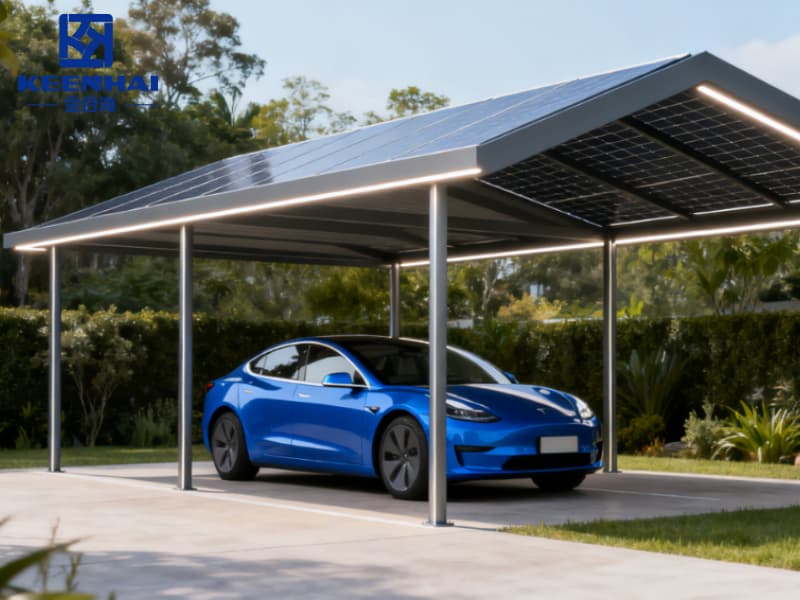
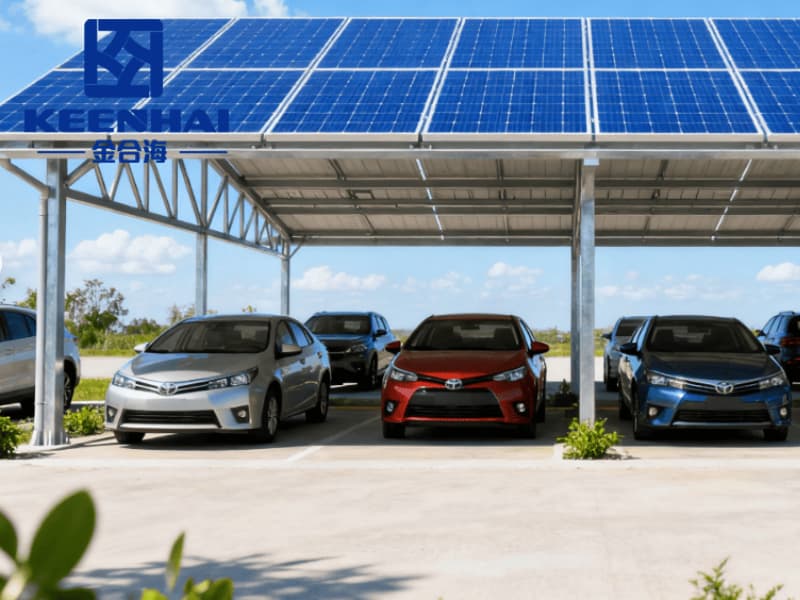
A high-performance multi-car solar carport is one of the most cost-effective renewable energy solutions for residential households and small commercial properties. Unlike traditional rooftop solar systems, solar carports make full use of idle parking space, providing vehicle shading while generating clean electricity for home power supply, EV charging, and grid power backup. However, most standard solar carport installations fail to reach their maximum power generation potential due to improper panel placement, unsuitable component selection, unreasonable structural design, and irregular daily maintenance.
Based on NREL (National Renewable Energy Laboratory) industry data and 10+ years of Keenhai solar structure engineering experience, this comprehensive guide covers every actionable strategy to maximize multi-car solar carport efficiency. From precise panel layout and high-efficiency solar panel selection to optimized carport design, scientific maintenance, and professional energy management, these proven tactics can boost annual energy output by 20–30% and significantly extend the service life of your solar carport system, greatly improving long-term investment return.
1. Optimizing Solar Panel Placement for Maximum Sun Exposure
Precise solar panel placement is the foundation of high solar efficiency. Data shows that a mere 10% misalignment or unaddressed shading can cause a sharp drop in power generation, directly reducing the system’s annual output. Many property owners ignore subtle environmental obstructions and angle errors during installation, resulting in low ROI. Reasonable tilt angle, accurate orientation, and zero shading are the three core principles of multi-car solar carport layout.
1.1 Set Ideal Tilt Angles for Seasonal Sunlight Adaptation
The optimal panel tilt angle is closely matched with the local latitude, which ensures stable sunlight absorption throughout the year. For most regions, the fixed tilt angle is recommended to be 5–10° lower than the local latitude to balance seasonal power generation. Taking 35° latitude as an example, a tilt angle of 30–35° is the most scientifically sound fixed configuration.
For adjustable-tilt aluminum solar carports, seasonal angle adjustment can further improve power generation efficiency:
-
Summer adjustment: Slightly reduce the tilt angle to adapt to high-angle overhead sunlight, avoid panel overheating, and maintain stable power generation efficiency.
-
Winter adjustment: Increase the tilt angle by 10–15° to fully capture low-angle winter sunlight and make up for insufficient light duration.
According to NREL comparative tests, multi-car solar carports with scientifically adjusted angles can produce 15–20% more annual energy than flat-mounted solar systems. Equipped with Keenhai’s adjustable locking brackets, the panels can be adjusted and cleaned without disassembly, ensuring long-term stable operating performance.
1.2 Scientific Panel Orientation to Guarantee Baseline
Panel orientation determines the basic power generation baseline of the solar carport system. For all regions in the Northern Hemisphere, true south-facing installation achieves the highest annual energy yield; Southern Hemisphere areas are suitable for true north-facing layout. For urban narrow lots and irregular sites with limited installation conditions, small-angle deviation will not cause obvious efficiency loss.
|
Panel Orientation
|
Energy Yield Impact
|
Professional Notes
|
|
True South (Northern Hemisphere)
|
100% Baseline Yield
|
Optimal all-season sunlight absorption, standard engineering configuration
|
|
10°–15° East/West Deviation
|
98–99% Yield
|
Negligible loss, suitable for restricted lot layouts
|
|
20° East/West Deviation
|
95% Yield
|
Slight power drop; properly increase panel quantity for compensation
|
Keenhai’s modular multi-car solar carport supports differentiated angle layouts for different roof areas, solving the power generation loss problem of asymmetrical sites and maximizing the overall combined power generation efficiency of the entire parking system.
1.3 Eliminate All Shading Obstructions to Avoid Efficiency Loss
Shading is the biggest invisible killer of solar system efficiency. Industry professional data confirms that local shading on a single panel will reduce the power output of the entire series array, which is extremely harmful to large-area multi-car solar carport systems. To completely avoid shading loss, implement the following standardized layout measures:
-
Simulate and map daily and seasonal sunlight changes before installation to avoid fixed shading areas formed by buildings, tall trees, and wall edges;
-
Trim overhanging tree branches regularly to eliminate seasonal shading interference;
-
Reserve sufficient vertical height for the carport frame to avoid shading caused by tall vehicles such as SUVs and trucks during morning and evening light periods;
-
Choose a freestanding solar aluminum carport for complex sites with many obstacles to flexibly adjust the installation position.
Practical project data shows that pre-installation shading analysis and obstruction optimization can increase the annual power generation of multi-car solar carports by 10–15%.
2. Selecting High-Efficiency & Durable Solar Panels
Solar panel quality and performance parameters directly determine the upper limit of system power generation, service life, and investment payback period. For multi-car solar carports with a large installation area, matching high-efficiency, temperature-resistant, and durable panels is the core to maintaining long-term high efficiency. We systematically compare mainstream panel types and core selection indicators for your project reference.
2.1 Monocrystalline vs Polycrystalline Panels: Professional Performance Comparison
Monocrystalline and polycrystalline panels are the two most mainstream options for solar carports, with obvious differences in efficiency, temperature resistance, and scene adaptability. For multi-car parking systems with limited space and high power generation requirements, monocrystalline panels are the preferred solution.
|
Panel Type
|
Conversion Efficiency
|
Temperature Coefficient
|
Applicable Scenarios
|
|
Monocrystalline Solar Panel
|
20–22%
|
−0.35%/°C
|
Limited parking space, high power generation demand, high ROI projects
|
|
Polycrystalline Solar Panel
|
15–18%
|
−0.45%/°C
|
Large installation area, cost-sensitive civil projects
|
In actual suburban and urban installation environments with partial shading and high summer temperatures, monocrystalline panels show far more stable performance. In addition, bifacial monocrystalline panels are the latest upgrade solution for solar carports, which can absorb reflected light from the ground, increasing overall power generation by an additional 10–15%.
2.2 Focus on Panel Wattage & Temperature Coefficient
High-wattage panels can reduce the total number of modules, simplify the installation structure of multi-car solar carports, and reduce frame load and later maintenance costs. Meanwhile, the temperature coefficient is a key indicator that determines the power generation stability of the system in high-temperature seasons.
Professional selection suggestions: Choose panels with a temperature coefficient of −0.30% to −0.35%/°C. The smaller the negative value, the weaker the power generation attenuation in high-temperature environments. A 1% difference in temperature coefficient can bring hundreds of kWh of power generation gap in the whole life cycle of the system, which cannot be ignored for large-area multi-car solar systems.
2.3 Prioritize Industrial-Grade Durable Panels
Solar carports are exposed to outdoor wind, rain, snow, and hail all year round, so panel durability is as important as efficiency. High-quality matching panels must have the following characteristics to ensure 25+ years of stable operation:
-
Reinforced aluminum alloy frame to resist strong wind and snow load pressure, adapting to extreme weather;
-
High-strength tempered hail-proof glass to avoid surface damage and light transmission obstruction;
-
Corrosion-resistant backsheet and sealing structure to prevent rainwater penetration and internal circuit aging.
Keenhai’s custom solar aluminum carport is matched with enhanced mounting accessories, which can fix the panel position stably for a long time and avoid efficiency attenuation caused by frame displacement.
3. Optimize Multi-car Solar Carport Structural Design
A scientific overall structure design is the key to tapping the power generation potential of multi-car solar carports. Reasonable roof layout, adjustable angle design, and auxiliary light-absorbing structure can effectively improve sunlight utilization without increasing the number of panels, realizing cost reduction and efficiency improvement.
3.1 Modular Roof Layouts for Full Sunlight Coverage
The modular segmented layout is the optimal design for multi-car solar carports. Divide the roof into independent units of 2–4 panels, which can adjust the layout independently according to the light conditions of different areas. Reserve 1–2 feet of spacing between panel rows to avoid front-row shading on rear panels.
This layout focuses on capturing the peak sunlight period from 10 a.m. to 3 p.m. with the strongest light intensity, ensuring maximum daily power generation. At the same time, the modular design supports later capacity expansion and partial maintenance and replacement, greatly improving the flexibility of system use.
3.2 Retain Adjustable Seasonal Angle Function
Compared with fixed-angle carports, multi-car solar carports with adjustable tilt angles can increase annual power generation by up to 15%. Cooperating with seasonal light changes, flexible angle adjustment ensures efficient light absorption in all seasons:
-
Winter: Increase the tilt angle to capture low-altitude sunlight and make up for insufficient light time;
-
Summer: Appropriately reduce the tilt angle to avoid panel overheating and improve light absorption uniformity.
Keenhai’s customized pivot locking bracket can firmly fix the adjusted angle, avoiding displacement and efficiency loss caused by strong winds and storms, and ensuring system operation safety.
3.3 Add Reflective Structures to Improve Light Utilization
Making full use of reflected ambient light is a low-cost and high-efficiency optimization method. Light-colored ground and reflective auxiliary structures can reflect scattered light to the back of bifacial panels, increasing the overall efficiency by 2–5%.
It is recommended to lay white, light-colored concrete under the carport or install lightweight aluminum reflective panels on the edge of the frame. The weather-resistant and durable reflective structure can maintain a long-term auxiliary light absorption effect and continuously improve the system's power generation capacity.
4. Standardized Maintenance to Sustain Peak Efficiency
Dust, fallen leaves, bird droppings, and loose parts will cause 5–10% loss in system efficiency. Scientific and regular maintenance can keep the multi-car solar carport in peak power generation state for a long time, reduce failure rate, and extend service life.
4.1 Regular Cleaning to Keep Panels Transparent
It is recommended to inspect and clean the panels every 4–6 weeks in high-dust and high-pollen seasons. Use soft brushes and microfiber cloths with clean water for cleaning, and do not use corrosive chemicals to avoid damaging the panel surface coating. Focus on cleaning the edges and corners where debris is easy to accumulate, and rinse thoroughly to avoid residual water stains affecting light transmission.
4.2 Regular Inspection of Structure & Circuit
Carry out quarterly comprehensive inspections: check whether the wiring harness is aging, corroded or loose, whether the mounting bolts and brackets are rusted or loose, and whether the panel surface is cracked or chipped. Timely repair and replace damaged parts to avoid cumulative efficiency loss and potential safety hazards.
4.3 Intelligent Monitoring of System Operation Data
Equip smart controllers and monitoring apps to realize real-time monitoring of power generation data, inverter operating status, and voltage parameters. Set abnormal data alerts to quickly locate shading pollution, circuit failure, and other problems, and formulate targeted maintenance plans according to operating data to maximize system uptime and power generation.
5. Professional Electrical & Energy Management Strategies
High-quality panels and structures need matching electrical configuration and energy management to maximize output. Optimized inverter selection, battery energy storage configuration, and load balancing scheduling can effectively reduce energy loss and improve the self-use rate of solar power.
5.1 Scientific Inverter Sizing & Installation
Calculate the total peak power of all panels, and select an inverter with 10–20% higher rated power to avoid overload operation. Install the inverter in a cool and shaded, well-ventilated area to reduce thermal attenuation loss, and reserve maintenance space to ensure long-term stable power conversion efficiency.
5.2 Reasonable Battery Energy Storage Configuration
Equipped with high-cycle lithium-ion batteries and a professional BMS battery management system, store excess daytime power to support night household power consumption and EV charging, reduce grid dependence, and cut electricity costs. Configure the battery capacity according to daily power consumption and peak power generation, and install it close to the inverter to minimize voltage drop loss.
5.3 Load Balancing & Peak Demand Optimization
Schedule high-power electrical equipment to work during the peak solar power generation period from 10 a.m. to 3 p.m. Realize automatic diversion of excess power through smart controllers, match power generation and load demand, avoid energy waste, and optimize power consumption strategies according to seasonal light changes to maintain efficient system operation all year round.
6. Frequently Asked Questions (FAQ)
Q1: What is the best tilt angle for a multi-car solar carport?
The optimal fixed tilt angle is 5–10° lower than the local latitude. Seasonal adjustable angles can increase power generation by 15%, with higher angles in winter and slightly lower angles in summer.
Q2: How much efficiency can a bifacial solar panel carport improve?
Matching bifacial panels with light-colored ground reflection can increase the overall power generation of multi-car solar carports by 10–15%, which is the most cost-effective upgrade solution at present.
Q3: How often should a solar carport be maintained?
Routine cleaning and inspection every 4–6 weeks, and comprehensive structural and electrical maintenance every quarter, can keep the system efficiency above 98% for a long time.
Q4: Is south-facing installation mandatory for solar carports?
True south is the optimal orientation for the Northern Hemisphere. A deviation of 10–15° has negligible impact on power generation, which can adapt to most complex site conditions.
Conclusion
Maximizing the efficiency of a multi-car solar carport is a systematic project covering layout design, component selection, structural optimization, daily maintenance, and energy management. Scientific panel placement, high-efficiency panel matching, modular adjustable structure, standardized maintenance, and intelligent energy management can comprehensively boost solar yield, reduce operating costs, and maximize long-term investment returns.
As a professional solar aluminum carport manufacturer with rich engineering experience, Keenhai provides customized multi-car solar carport solutions, including adjustable mounting structures, wind and snow resistant frames, and full-set system matching services. Our products are suitable for residential and commercial multi-car parking scenarios, helping every customer build high-efficiency solar power generation systems.