Commercial Pergola Buying Guide | What Business Owners Need to Know
Commercial pergolas are no longer just aesthetic upgrades — they're revenue-generating assets. Whether you're outfitting a restaurant terrace, hotel pool deck, or resort event space, the system you choose will impact your bottom line for 20+ years.
But commercial projects have very different demands than residential ones. Here's what you need to know to make a smart investment.
1. Why Commercial Pergolas Are Different
Usage intensity: A residential pergola serves a family. A commercial one handles hundreds of guests daily, year-round. It must withstand heavy traffic while performing flawlessly.
Revenue impact: A commercial pergola directly boosts income by increasing seating capacity, extending operating hours, enabling premium pricing (covered outdoor spaces command 15–30% higher ticket prices), and unlocking event-hosting revenue.
Regulatory requirements: Commercial pergolas almost always require permits and must comply with building codes (structural loads, wind resistance), fire codes (flame spread ratings), accessibility standards, zoning regulations, and health department requirements.
Lifespan expectations: Residential: 15–20 years is acceptable. Commercial: operators expect 25+ years — downtime means lost revenue.
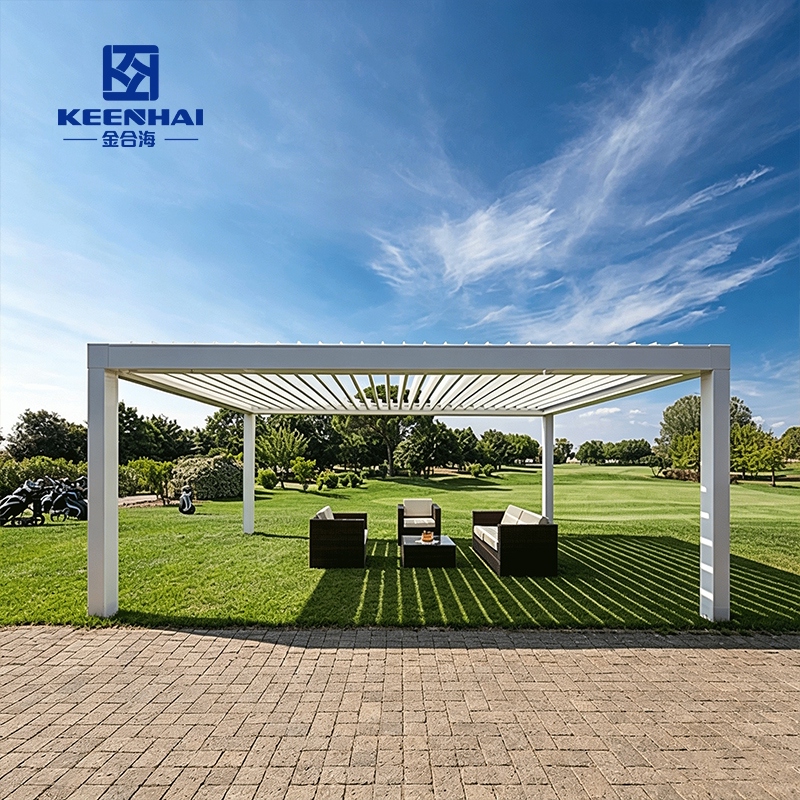
2. Types of Commercial Pergola Systems
Type
|
Best For
|
Price Range (Installed)
|
Fixed Roof
|
Year-round dining, pool pergola, walkways
|
$150–300/m²
|
Adjustable Louvered
|
Restaurants, hotel terraces, multi-season use
|
$250–500/m²
|
Retractable Canopy
|
Venues needing both open-air and covered experiences
|
$200–400/m²
|
Modular Expandable
|
Phased projects, chain rollouts, budget flexibility
|
$180–350/m²
|
Quick take: Fixed roofs offer maximum protection with minimal maintenance. Louvered systems give guests sun/shade control and premium positioning. Retractable canopies maximize flexibility but require more upkeep. Modular systems let you start small and scale.
3. Key Decision Factors
1. Structural Capacity
-
Wind loads: Coastal areas need 150 km/h+ ratings; inland typically 100–120 km/h. Always ask for engineering test reports.
-