
Introduction
Why Solar Carport Is a Top Investment in 2026
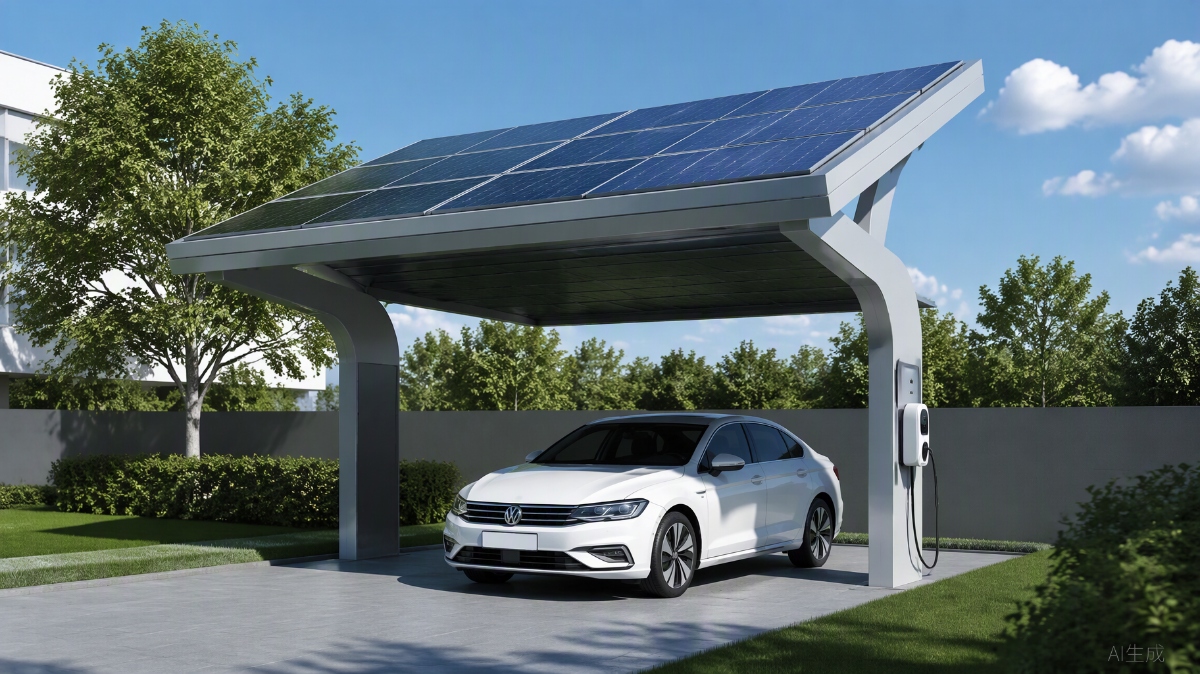
A solar carport has become one of the most practical and profitable renewable energy solutions for residential homeowners, commercial property managers, and industrial facility owners. Unlike traditional open parking shades and standard metal shelters, a professional carport with solar integration turns idle parking space into a continuous clean energy generator.
Installing a solar carport requires no extra land occupation, provides all-weather vehicle protection, and significantly cuts long-term electricity bills. For B2B buyers and bulk investors, a well-designed solar carport system also delivers stable ROI, tax incentives, and sustainable carbon reduction benefits.
This updated 2026 purchase guide covers every critical factor to help you select the most durable, cost-effective, and high-efficiency carport system for your project.
1. Core Benefits of Installing a Solar Carport
Before comparing specifications, buyers should understand why the solar carport outperforms regular parking structures and rooftop solar systems.
1. A solar carport maximizes space utilization. Parking areas are usually vacant during daytime hours, making them ideal locations for solar harvesting.
2. The elevated carport structure improves solar panel ventilation, resulting in higher power generation efficiency than rooftop solar setups.
3. The carport framework shields vehicles from UV rays, heavy rain, snow, and hail, extending vehicle service life while generating free electricity.
4. Commercial-scale solar carport projects increase property value, meet green building standards, and generate passive income via grid-tied power sales.
2. Solar Carport Material Selection: Steel vs Aluminum Alloy
The frame material determines the durability, wind resistance, snow load, and overall lifespan of your solar carport. Choosing the wrong material will lead to deformation, rust, structural failure, and costly replacement in just a few years.
Below is a detailed comparison of the two mainstream carport materials.
Material Type
Advantages
Disadvantages
Best Application Scenarios
Hot-Dip Galvanized Steel
High hardness, strong load-bearing capacity, excellent wind resistance, lower unit cost, stable structure for large spans
Heavier weight, requires regular anti-rust maintenance, ordinary appearance
Industrial parks, large commercial parking lots, heavy snow and strong wind areas
Aluminum Alloy
Lightweight, fully rust-proof, corrosion-resistant, easy installation, sleek modern appearance, low maintenance
Slightly higher cost, lower ultimate bearing limit than steel
Residential homes, office buildings, high-end commercial districts, coastal humid areas
For most standard projects, a galvanized steel carport remains the most cost-effective option, while an aluminum alloy solar carport is strongly recommended for seaside, rainy, and high-corrosion environments.
3. Solar Panel Type & Power Configuration for Solar Carport
The top power generation performance of a solar carport depends heavily on photovoltaic module selection. Currently, monocrystalline solar panels dominate the carport industry due to their high conversion rate (21%–23%), outstanding low-light performance, and compact size. Polycrystalline panels are gradually phased out for new solar carport projects because of lower efficiency and larger space occupation.
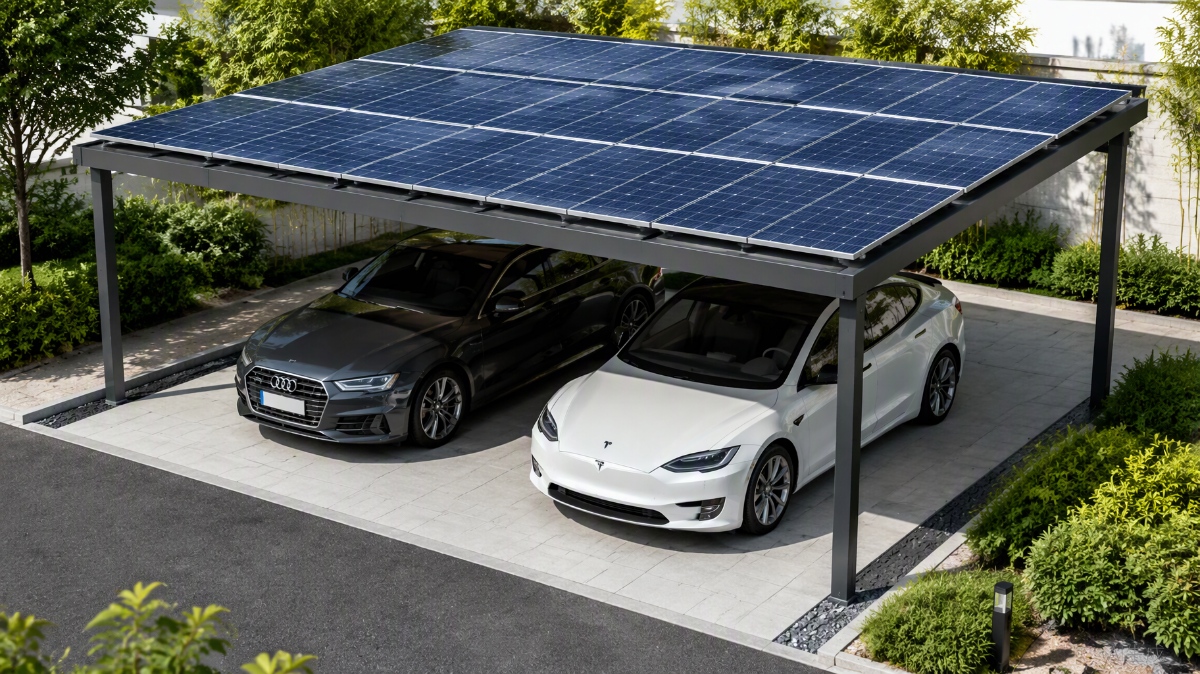
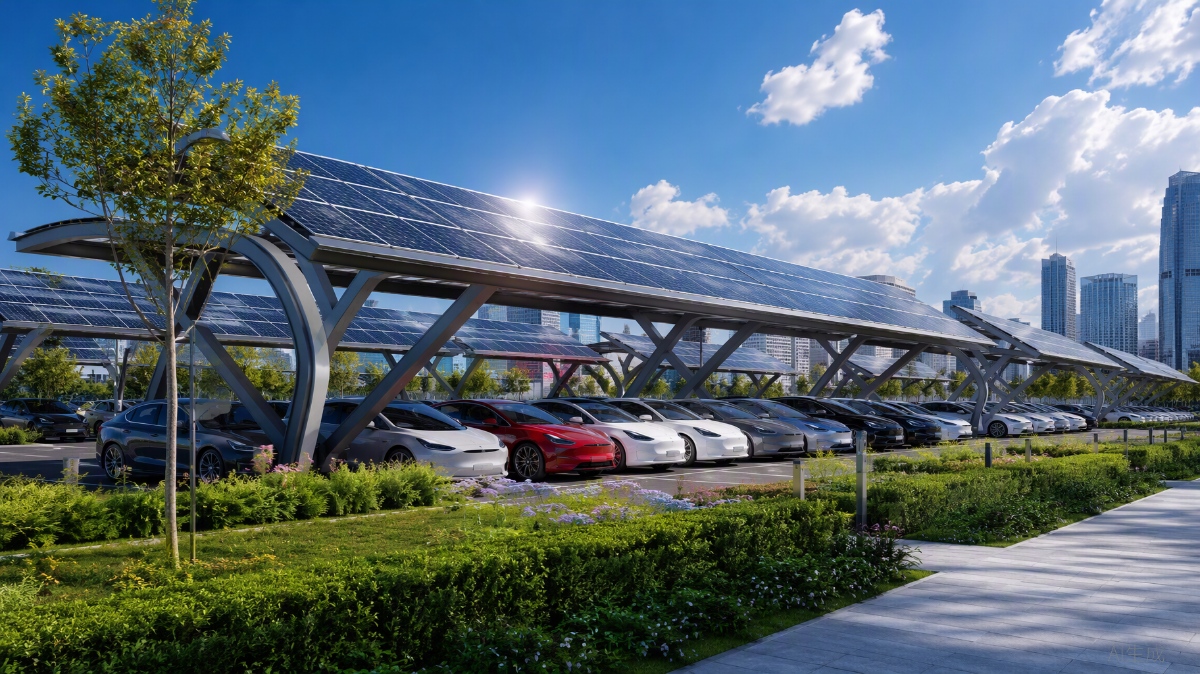
For a single residential carport, 3 to 6 pieces of 550W+ high-efficiency mono panels are enough to cover basic household electricity usage. For commercial solar carport systems with double-row or large-span layouts, investors can configure centralized solar arrays to build distributed photovoltaic power stations, realizing large-scale power generation and grid revenue.
4. Structural Design & Weather Load Standard
A qualified solar carport must pass strict wind pressure and snow pressure tests. Many low-cost carport products on the market use thin and unqualified brackets, which easily collapse under typhoons, heavy snow, or strong storms.
4.1 Standard Size Specification
The standard residential solar carport height ranges from 2.8m to 3.2m, with a single span of 2.5m to 3m, perfectly fitting sedans, SUVs, and family vehicles. For trucks, vans, and engineering vehicles, customized high and wide carport structures are required.
4.2 Extreme Weather Adaptability
Coastal areas need reinforced solar carport designs with thickened embedded parts and anti-typhoon brackets. Snowy regions require upgraded snow-load structures to prevent winter accumulation damage.
5. Grid-Tied vs Off-Grid Solar Carport System
Buyers need to confirm the system type before finalizing the carport order, as the configuration directly affects usage function and ROI.
5.1 Grid-Tied Solar Carport
This is the most popular solution for urban and commercial projects. The grid-tied solar carport transmits surplus electricity to the public grid and generates monthly power sales income. It features a simple structure, low failure rate, and minimal maintenance.
5.2 Off-Grid Solar Carport
Equipped with lithium battery energy storage systems, the off-grid carport stores power for blackouts and independent power supply. It is ideal for rural areas, remote scenic spots, and areas with unstable grid power.
6. Solar Carport Cost & Budget Tips (2026 Market)
The total cost of a solar carport includes frame structure, PV panels, inverter, electrical accessories, transportation, and installation. Many buyers blindly pursue ultra-low prices but end up with short-lived carport equipment and higher replacement costs.
High-quality standard solar carport products feature stable performance, a 10–20-year structural warranty, and a 25-year solar panel power guarantee. Reasonable budget planning focuses on long-term ROI rather than one-time low cost. In addition, global renewable energy subsidies and tax deductions can effectively shorten the payback period of a carport solar system.
Frequently Asked Questions About Solar Carport
Q1: Is a solar carport better than rooftop solar?
A1: Yes. A solar carport has better ventilation, no roof renovation damage, flexible installation, and dual functions of power generation and shading, making it more suitable for most new energy projects.
Q2: How long does a solar carport last?
A2: A high-quality carport frame lasts 20–30 years, and solar panels maintain effective power generation for 25 years or longer.
Q3: Can I customize the size and color of the solar carport?
A3: Professional manufacturers support full customization, including span, height, appearance color, and power configuration to match residential or commercial project demands.
Buying Conclusion
A high-quality solar carport is a dual-value investment that combines practical shading protection and sustainable clean energy benefits. When purchasing a carport, buyers should prioritize structural safety, material durability, power generation efficiency, and formal after-sales warranty, instead of only focusing on low prices. Whether for residential family use or large-scale commercial projects, a properly configured solar carport can bring long-term stable economic returns and green energy value.
Looking for reliable custom solar carport solutions? Contact our professional team for a free quotation and project design today.