How to Customize a Bioclimatic Pergola for Your Space
1. Evaluate Your Space and Functional Needs
Customizing a pergola starts with how your space actually works, not with finishes or accessories. A Bioclimatic Pergola only performs well when its size, structure, and purpose align with real site conditions and daily use. Ignoring this step often leads to wasted budget, poor shading performance, or features that never get used. The goal here is practical fit, not visual guesswork.
1.1 Available Area, Height Limits, and Structural Conditions
Begin by measuring the usable footprint, vertical clearance, and nearby obstacles such as walls, parapets, or trees. Ceiling height matters more than most buyers expect—motorized louvers typically require additional headroom for tilt angles and drainage channels. For rooftop terraces or balconies, load-bearing capacity also dictates whether a freestanding system or a wall-mounted solution works better. In compact urban settings, many projects opt for slimmer aluminum frames that maximize coverage without overwhelming the space, similar to how an Aluminum balcony pergola integrates into narrow residential layouts.
1.2 Intended Use: Residential, Commercial, or Mixed-Use
How you plan to use the space directly shapes customization decisions. A private backyard lounge prioritizes comfort and flexibility, while a café terrace or hotel patio focuses on durability and daily operation cycles. Commercial spaces often require wider spans, faster louver response, and higher wind-load tolerance because the pergola functions as revenue-generating infrastructure. In contrast, residential users tend to value quiet motor operation and visual integration with the home façade. A poolside environment adds another layer—constant moisture and sun exposure—which explains why many designers favor corrosion-resistant systems similar to those used in Aluminum poolside pergola installations.
1.3 Daily Usage Patterns and Environmental Exposure
Think about when and how often the pergola operates. Morning sun, afternoon heat, seasonal rain, and prevailing wind all influence orientation and louver configuration. A space used daily for dining needs faster adjustment and reliable rain sealing, while an occasional leisure area may not justify advanced automation. Coastal or high-humidity regions demand finishes that resist oxidation and fading over time, which is why aluminum-based structures often outperform traditional materials in long-term performance. These real-world usage patterns ultimately determine whether customization delivers convenience—or becomes unnecessary complexity.
2. Determine Size, Layout, and Orientation
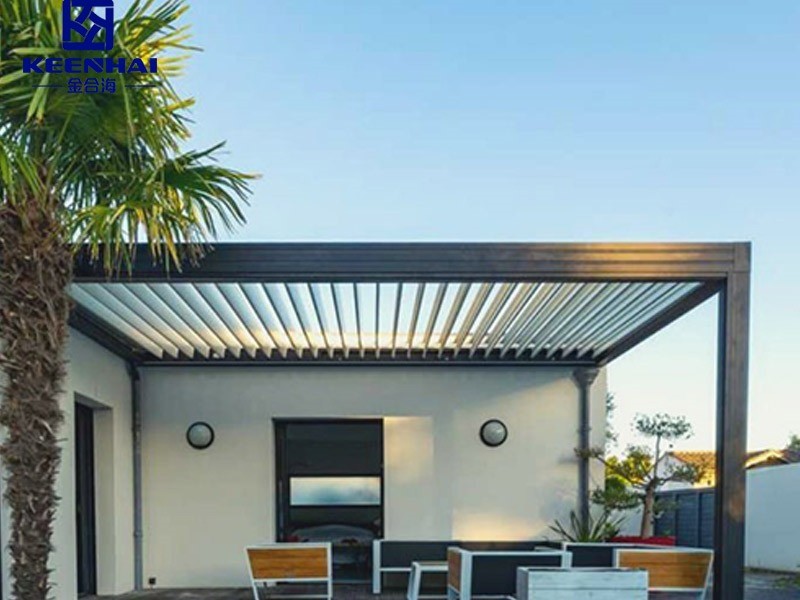
Getting the size and orientation right determines whether a pergola feels seamless or awkward in daily use. Dimensions affect shading efficiency, airflow, drainage, and even motor lifespan, so this step directly influences long-term performance rather than just appearance. A well-planned layout allows a Bioclimatic Pergola to work with the site’s climate instead of constantly fighting it.
2.1 Standard Modules vs Fully Customized Dimensions
Standard modules suit many residential patios because they reduce lead time and control cost. However, irregular terraces, rooftop edges, or commercial courtyards often demand custom dimensions to avoid dead zones or exposed seating. Oversizing increases material cost without improving comfort, while undersizing limits shade coverage during peak sun hours.
|
Option
|
Typical Use
|
Key Advantage
|
Practical Limitation
|
|
Standard modules
|
Small to mid-size patios
|
Faster delivery, predictable cost
|
Limited fit for irregular spaces
|
|
Custom dimensions
|
Rooftops, hotels, restaurants
|
Exact coverage, clean alignment
|
Higher fabrication and planning effort
|
In real projects, designers frequently extend spans or adjust column spacing to maintain clear walkways and furniture layouts, especially when integrating lighting or side screens later.
2.2 Sun Path, Wind Direction, and Drainage Considerations
Orientation decides how effective the louvers feel throughout the day. Louvers aligned perpendicular to the sun path block midday heat while still allowing morning light, which improves comfort without darkening the space. Wind direction matters just as much; prevailing winds should flow parallel to the louver gaps to enhance natural ventilation and reduce vibration.
Drainage planning requires precision. Integrated gutter systems rely on slight slopes and correct louver angles, so installers typically follow a clear sequence:
-
Confirm dominant sun exposure across seasons.
-
Align louver rotation to shade peak hours first.
-
Position drainage outlets away from seating and walkways.
In outdoor dining areas or pool decks, many projects pair this orientation strategy with an aluminum pergola sunshade system to balance airflow and water control without adding bulky roofing elements. When size and orientation work together, the pergola behaves like a climate tool—not just a cover.
3. Customize the Louver Roof System
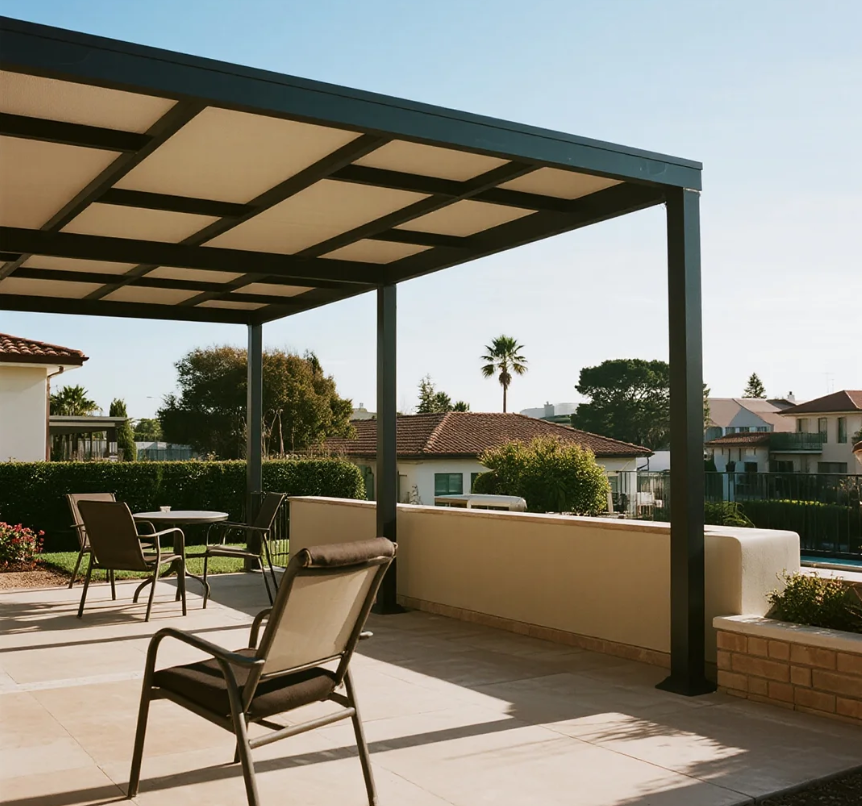
The louver roof defines how a pergola actually performs hour by hour. Angle range, opening precision, and control method decide whether the structure adapts smoothly to sun, heat, and rain—or forces constant adjustment. A properly configured Bioclimatic Pergola uses the roof as an active climate tool rather than a static cover, which explains why roof customization sits at the center of most successful projects.
3.1 Adjustable Louver Angles and Coverage Control
Louver angle directly controls sunlight penetration, airflow, and rain handling. Most systems allow rotation from fully closed to approximately 120–135 degrees, which lets users fine-tune shade without blocking ventilation. Shallower angles work best for harsh midday sun, while partial openings reduce heat buildup and glare in the afternoon. In hospitality settings, operators often set preset angles for lunch versus evening service to maintain comfort without manual tweaking. When projects require lighter visual profiles or softer shading effects, designers sometimes borrow principles from an aluminum sunshade for pergola solution, using narrower louvers to balance coverage and openness.
3.2 Manual vs Motorized Louver Operation
Control method affects daily usability more than most buyers expect. Manual systems suit low-frequency residential use, but motorized options dominate medium and large installations for a reason. Electric drives deliver consistent louver alignment, faster response to weather changes, and reduced wear from uneven handling. In practice, installers follow a clear process to ensure reliability:
-
Confirm power routing and control placement before mounting frames.
-
Calibrate motor limits to prevent over-rotation.
-
Test synchronized movement across all louver sections.
For restaurants, rooftops, and pool areas, motorized operation quickly pays off through smoother transitions and fewer service interruptions, especially during sudden weather changes.
4. Select Frame Materials, Colors, and Finishes
Frame material and surface finish determine how a pergola ages, not just how it looks on day one. Structural stability, corrosion resistance, and color durability all come from material choice, which is why this step directly affects maintenance cost and long-term value. For most modern outdoor projects, aluminum-based systems dominate because they balance strength, weight, and design flexibility far better than traditional options.
4.1 Aluminum Frame Options and Surface Treatments
High-grade aluminum frames resist rust, warping, and UV degradation, even in coastal or high-humidity environments. Powder-coated finishes remain the industry standard because they provide uniform color thickness and long-term adhesion. A properly coated aluminum frame typically withstands years of sun exposure without fading or peeling, which explains why it underpins most Bioclimatic Pergola systems used in residential and commercial settings alike.
In practice, manufacturers select coating thickness and pretreatment based on exposure level—standard patios require less protection than beachfront terraces or pool decks. Many projects pair these frames with integrated shading concepts similar to an aluminum pergola sunshade, ensuring the structure stays lightweight while delivering consistent performance under heat and moisture.
4.2 Color Coordination With Architecture and Outdoor Design
Color choice influences how seamlessly the pergola blends into its surroundings. Neutral tones like matte black, charcoal gray, or sand beige work well with stone façades and concrete terraces, while warmer finishes complement wood decking and landscaped gardens. Matching the pergola color to window frames, railings, or exterior trim creates visual continuity without overpowering the space.
Designers often test samples under direct sunlight before final approval, since outdoor lighting conditions exaggerate contrast. In compact balconies or rooftop lounges, lighter finishes help maintain openness, while darker tones define zones in larger commercial layouts. When material quality and color coordination align, the pergola reads as part of the architecture—not an added accessory.
5. Add Functional Accessories and Comfort Features
Accessories determine whether a pergola stays usable beyond perfect weather. Side protection, lighting, heating, and automation transform an open structure into a controlled outdoor environment, extending daily use and seasonal value. The key lies in selecting features that match real habits rather than adding options for appearance alone.
5.1 Side Screens, Sliding Panels, and Privacy Solutions
Side enclosures improve comfort by blocking low-angle sun, wind gusts, and visual exposure. Zip screens work well for flexible shading, while sliding panels provide stronger wind resistance and a more architectural feel. Privacy solutions matter most in dense residential areas, balconies, and mixed-use developments, where sightlines and noise affect usability. In compact urban projects, designers often combine vertical screens with an aluminum balcony pergola layout to maintain airflow while shielding adjacent spaces. Proper alignment and tension ensure smooth operation and prevent fabric wear over time.
5.2 Lighting, Heating, and Automation Integration
Integrated systems extend usability into evenings and colder months. LED strip lighting embedded in beams delivers even illumination without glare, while infrared heaters focus warmth directly on occupied zones. Automation simplifies daily control by synchronizing louvers, lighting, and climate response within a single interface, which proves especially valuable in commercial settings. Installation typically follows a clear sequence:
-
Route electrical conduits before frame assembly.
-
Mount fixtures after structural alignment.
-
Program control presets for different usage periods.
When accessories integrate cleanly with a Bioclimatic Pergola, the space functions reliably across changing conditions instead of relying on temporary add-ons.