
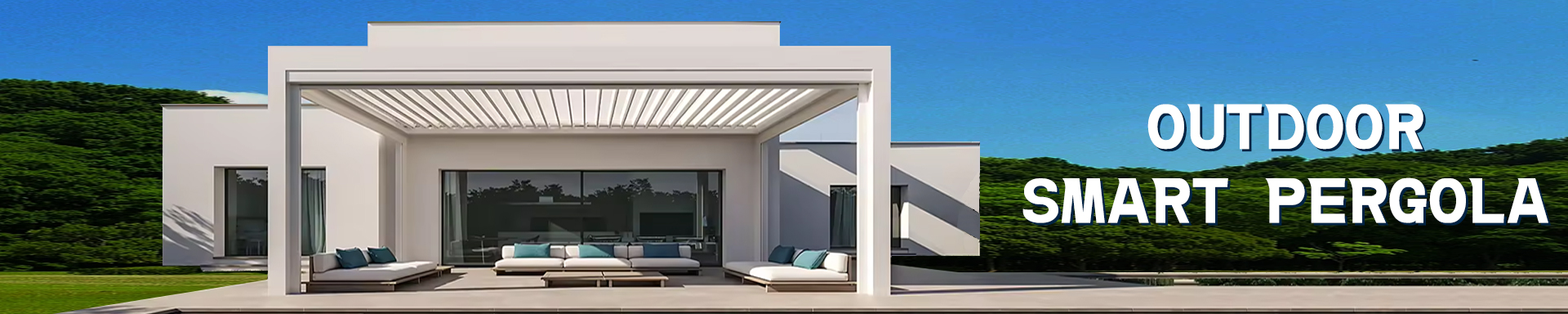
1. Material and Structural Components
Selecting the right materials and structural components is the foundation for a durable and cost-effective louvered pergola. Every element—from aluminum alloy to blade thickness—directly affects performance, longevity, and, ultimately, factory direct price. Experienced suppliers focus on high-grade materials and precise engineering to deliver reliable pergolas for residential and commercial projects. For instance, a modern louvered pergola installed on a rooftop terrace must handle both wind and rain without compromising operation or aesthetics.
1.1 Aluminum Alloy Type and Quality
The aluminum used in pergola frames varies widely in strength and corrosion resistance. Commonly, 6063-T5 or 6061-T6 aluminum alloys are preferred for outdoor structures. 6063-T5 offers excellent extrusion capability and surface finish, making it ideal for custom profiles, while 6061-T6 provides higher tensile strength, suitable for larger spans or heavily loaded roofs.
A 6x5 meter aluminum motorized pergola on a coastal property withstood 130 km/h wind gusts thanks to 6061-T6 framing.
| Alloy Type | Tensile Strength (MPa) | Corrosion Resistance | Common Use |
|---|---|---|---|
| 6063-T5 | 160–190 | High | Residential pergolas, medium spans |
| 6061-T6 | 290–310 | Very High | Large commercial installations, high-load roofs |
Suppliers who maintain consistent alloy sourcing can control both structural integrity and cost predictability, ensuring customers don’t face unexpected price hikes due to material substitutions.
1.2 Powder Coating, Finishes, and Corrosion Protection
Surface treatment not only enhances visual appeal but also significantly impacts durability. High-quality powder coating provides UV resistance, scratch protection, and anti-corrosion performance. Typical thickness ranges between 60–80 microns, applied through an electrostatic process and baked for permanent adhesion.
A 5x4 meter aluminum pergola house installed in a backyard with heavy rainfall maintained its finish for over five years without fading or peeling. For areas near the ocean, suppliers often apply marine-grade coatings to withstand salt spray and humidity.
Key points for quality verification:
-
Ensure the coating is uniform and defect-free.
-
Check adhesion using a cross-hatch tape test.
-
Ask for salt spray test reports if the installation is near the coast.
1.3 Structural Reinforcements and Blade Thickness
The load-bearing design is crucial for both safety and long-term functionality. Blade thickness, cross-sectional dimensions of beams, and reinforcement methods determine how a pergola handles wind, rain, and snow. Standard blade thickness ranges from 1.5 mm to 3 mm depending on size and automation.
A 6x5 meter aluminum automated pergola with reinforced crossbeams and 2.5 mm louvers operated flawlessly for three winter seasons in a region with heavy snow.
Step-by-step approach to evaluating structural components:
-
Inspect main beams for cross-section dimensions and alloy type.
-
Verify blade thickness matches span and expected load.
-
Check for integrated reinforcements, such as gussets at corner joints.
-
Confirm that all fasteners are stainless steel or corrosion-resistant.
Strong structural planning ensures your pergola maintains mechanical stability, reduces maintenance costs, and aligns with factory direct pricing expectations.
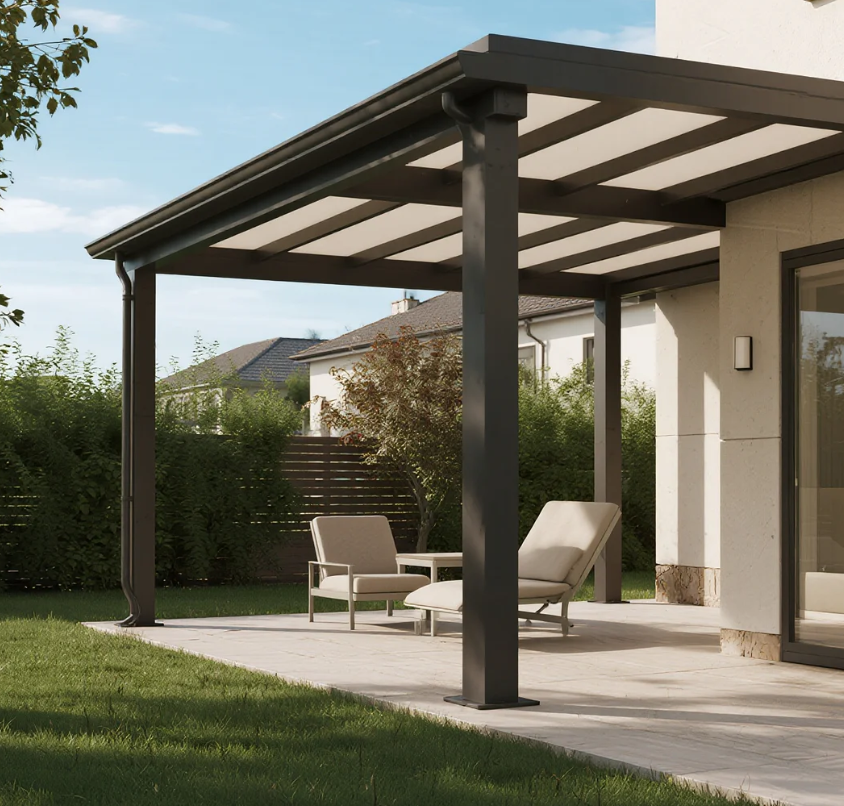
2. Design Complexity and Customization
The design and customization level of a louvered pergola directly affects both its functionality and factory direct cost. From overall size and roof configuration to motorized automation and surface finishes, every design choice impacts materials, installation effort, and system performance. Experienced suppliers balance structural integrity, aesthetics, and operational convenience to deliver cost-effective solutions without compromising quality.
2.1 Size, Span, and Roof Configuration
Pergola dimensions and roof design are critical determinants of cost. Larger spans require stronger beams, thicker louvers, and additional reinforcements, while complex roof shapes—such as gable or multi-sloped designs—demand precise engineering.
A 7x5 meter aluminum modern gazebo on a rooftop deck incorporated a dual-sloped louvered roof to optimize sunlight control and water drainage. The installation included reinforced corner joints and crossbeams, ensuring wind resistance up to 120 km/h.
Key considerations for sizing and configuration:
-
Measure the intended installation area precisely to avoid over- or under-sizing.
-
Decide on roof style (flat, sloped, gable) based on aesthetic preference and water drainage needs.
-
Assess structural reinforcement requirements based on span and expected loads.
2.2 Motorized vs Manual Louvers
Choosing between motorized and manual louver operation significantly affects the pergola's cost and user experience. Motorized systems provide convenient, remote-controlled adjustment and can integrate with smart home automation, while manual louvers offer a simpler, lower-cost alternative.
A 6x4 meter aluminum automated pergola installed in a residential backyard allowed the homeowners to adjust sunlight exposure at the touch of a button, significantly enhancing outdoor comfort during hot summer afternoons.
Steps to evaluate which system fits your project:
-
Determine frequency of operation and user convenience needs.
-
Compare motor types: AC vs DC motors, power rating, and warranty coverage.
-
Assess integration with sensors or home automation if desired.
-
Factor in maintenance requirements and long-term reliability.
2.3 Color Options and Surface Textures
The pergola’s color and texture affect both its aesthetic appeal and environmental performance. Powder-coated finishes, anodized surfaces, and custom paint options allow the pergola to blend with surrounding architecture, while also providing UV and corrosion resistance.
A 5x3 meter aluminum pergola house with matte graphite powder coating maintained its sleek appearance for over five years in a coastal setting, despite constant exposure to salty air and high humidity.
Tips for color and surface selection:
-
Match color tones with exterior walls, flooring, and surrounding landscape.
-
Evaluate coating thickness and adhesion testing to ensure durability.
-
Consider textures like woodgrain or metallic finishes to enhance visual appeal and mask minor scratches.
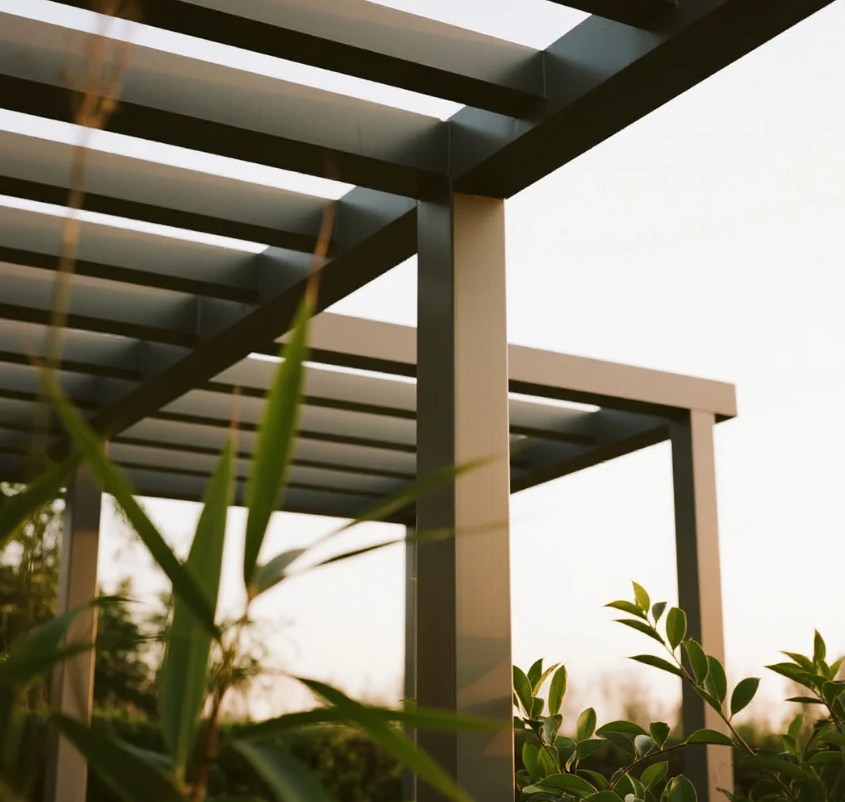
3. Manufacturing Process and Factory Efficiency
The way a louvered pergola is manufactured has a direct effect on both cost and long-term performance. Factories that control production in-house ensure every aluminum beam, louver, and joint meets design specifications, while outsourced fabrication often introduces variability in quality and finish. When components are consistently produced under precise standards, the pergola maintains durability and aesthetic appeal for years.
3.1 In-House Fabrication vs Outsourced Production
Factories with in-house fabrication maintain tight control over every stage, from cutting and welding aluminum profiles to final assembly. This setup allows adjustments to tolerances, coatings, and complex designs without relying on external vendors. By comparison, suppliers that outsource most processes risk inconsistencies in material quality and dimension accuracy.
To verify a supplier’s capabilities:
-
Observe whether cutting, welding, and finishing occur under one roof.
-
Review internal quality control procedures for structural beams and blades.
-
Confirm their ability to implement last-minute adjustments in design without production delays.
-
Check if final inspection reports are systematically documented.
3.2 Automation and Precision Machinery Impact
Advanced machinery significantly affects both accuracy and efficiency. CNC cutting, robotic bending, and automated drilling ensure every louver and supporting beam meets exact dimensions. Precision equipment also allows for custom configurations, including multi-span or slightly curved roofs, without increasing labor costs.
For example, a factory producing several aluminum motorized pergolas simultaneously can maintain uniform blade thickness and precise alignment. Automation ensures that finishes remain consistent across units, and the integration of motorized systems functions smoothly without additional adjustments.
3.3 Batch Size and Lead Time Considerations
The size of production batches directly influences cost and delivery schedules. Small custom batches often cost more per unit due to setup, handling, and testing requirements, while larger batches benefit from material and process efficiencies. Suppliers optimize workflow by sequencing machining, welding, and finishing in a continuous line, reducing idle time and minimizing defects.
Typical steps in managing production efficiently:
-
Allocate raw materials based on batch size and pergola dimensions.
-
Schedule machining, coating, and assembly in a synchronized workflow.
-
Conduct inspections at multiple stages to catch deviations early.
-
Coordinate logistics and packaging to meet project timelines without delays.
By evaluating a supplier’s in-house capabilities, automation level, and batch management, you can ensure both reliability and predictability in cost and delivery for your louvered pergola.
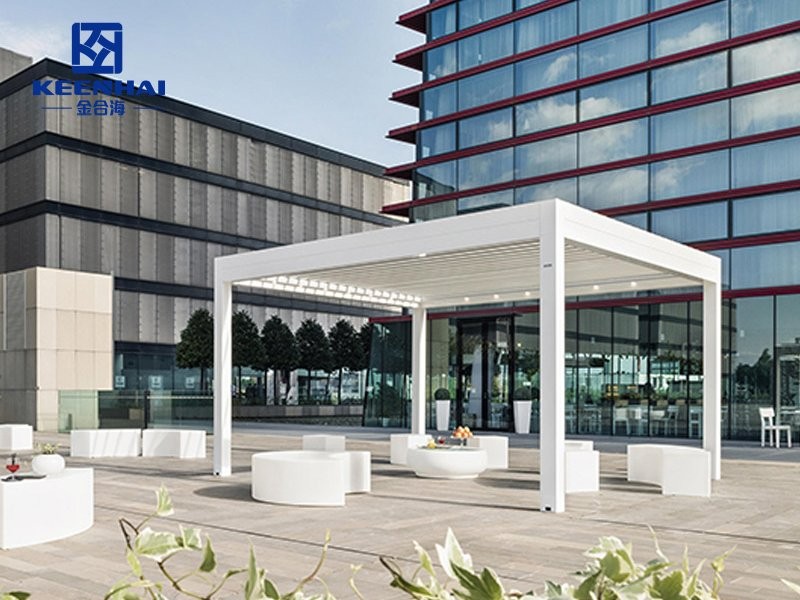
4. Control Systems and Accessories
Control systems and optional accessories are crucial in defining the functionality and convenience of a louvered pergola. A carefully chosen motor and properly integrated automation can transform a simple outdoor structure into a fully adjustable, weather-responsive space. Suppliers that offer flexible options, including lighting, drainage, and environmental sensors, help homeowners optimize comfort and usability throughout the year.
4.1 Motor Selection and Integration
The choice of motor directly affects performance, reliability, and ease of operation. Suppliers often offer AC or DC motors with variable torque ratings suitable for different louver sizes. High-quality aluminum motorized pergolas integrate the motor within the louver framework, minimizing visible wiring and maintaining a clean profile.
Steps to evaluate motor integration:
-
Verify torque and speed ratings match the pergola’s blade size and span.
-
Check whether the motor supports smooth, quiet operation without vibration.
-
Assess compatibility with manual override in case of power outages.
-
Ensure the motor is accessible for routine maintenance without disassembly of structural beams.
4.2 Smart Automation, Sensors, and Wiring
Advanced pergolas increasingly feature smart automation, allowing louvers to adjust automatically based on sunlight, rainfall, or wind conditions. Integration includes:
-
Sun and rain sensors for automatic opening/closing.
-
Smart home connectivity for remote control via mobile apps.
-
Concealed wiring channels to protect cables from weather and maintain a tidy look.
For instance, a fully automated louvered pergola can close its blades when sudden rainfall is detected, preventing water accumulation on the structure. Proper installation of sensors and wiring ensures reliability and reduces the risk of short circuits or motor strain.
4.3 Optional Add-ons: Lighting, Drainage, and Weather Sensors
Optional features enhance usability and longevity. Integrated LED lighting allows for evening use, while built-in drainage channels prevent water pooling, protecting both louvers and supporting beams. Some systems offer wind sensors that trigger blade closure during gusts, reducing structural stress.
Key considerations for selecting add-ons:
-
Plan lighting layout to balance illumination without glare.
-
Confirm drainage channels align with roof slope and exterior water management.
-
Test sensor responsiveness during installation to ensure blades react accurately.
-
Verify compatibility of all accessories with existing motorized or manual systems.
Choosing a supplier that offers robust motors, smart sensors, and well-engineered accessories ensures your louvered pergola operates efficiently, adapts to weather conditions, and remains visually appealing for years.
5. Supplier Policies and Warranty Implications
Choosing a reliable louvered pergola supplier goes beyond just material quality and design. Supplier policies and warranty coverage directly affect your long-term satisfaction and the lifespan of your pergola. Understanding what is included in warranties, how spare parts are handled, and how transparent pricing is can save you unexpected costs and ensure smooth operation for years.
5.1 Warranty Coverage for Structure and Motors
A robust warranty demonstrates a supplier’s confidence in their craftsmanship. Look for coverage that includes:
-
Structural integrity – Beams, posts, and louvers should be guaranteed against defects or premature wear for several years.
-
Motor and automation systems – Motors, gearboxes, and smart controllers should be included in the warranty to protect against mechanical or electrical failures.
-
Service response – A clear process for warranty claims ensures that any issues are addressed promptly.
Selecting a supplier with comprehensive coverage for both structural components and motor systems, like KeenHai Pergola, gives homeowners confidence that problems will be resolved quickly, minimizing downtime and protecting your investment.
5.2 Spare Parts Availability
Even the best-built pergola may occasionally require replacements or maintenance. Evaluating a supplier’s spare parts strategy is essential:
-
Confirm whether critical components—louvers, motors, brackets, and control units—are kept in stock.
-
Assess the technical support response time for troubleshooting or part replacement.
-
Check if the supplier offers easy ordering for additional accessories or upgrades, so your pergola can adapt to changing needs over time.
A supplier that keeps replacement components in stock and responds quickly to maintenance requests, such as KeenHai Pergola, ensures minimal downtime for motorized or manual louvered systems, keeping your outdoor space functional and safe.
5.3 Supplier Pricing Transparency and Discounts
Transparent pricing reflects how much a supplier values honesty and customer trust. Key points to review include:
-
Itemized quotes – Every pergola quote should clearly list materials, labor, motors, control systems, and optional add-ons.
-
Discount policies – Check whether bulk orders, repeat customers, or bundled accessory packages are eligible for savings.
-
Change management – Understand how design changes or upgrades during production may affect the final cost.
Working with a supplier that provides clear, upfront pricing prevents surprises and helps you compare options confidently, ensuring your pergola project stays within budget without compromising quality.